
Research Week Highlights Student Scholarship Across Campus
Mississippi College students presented research in science, humanities, engineering, and the arts during the university-wide academic showcase

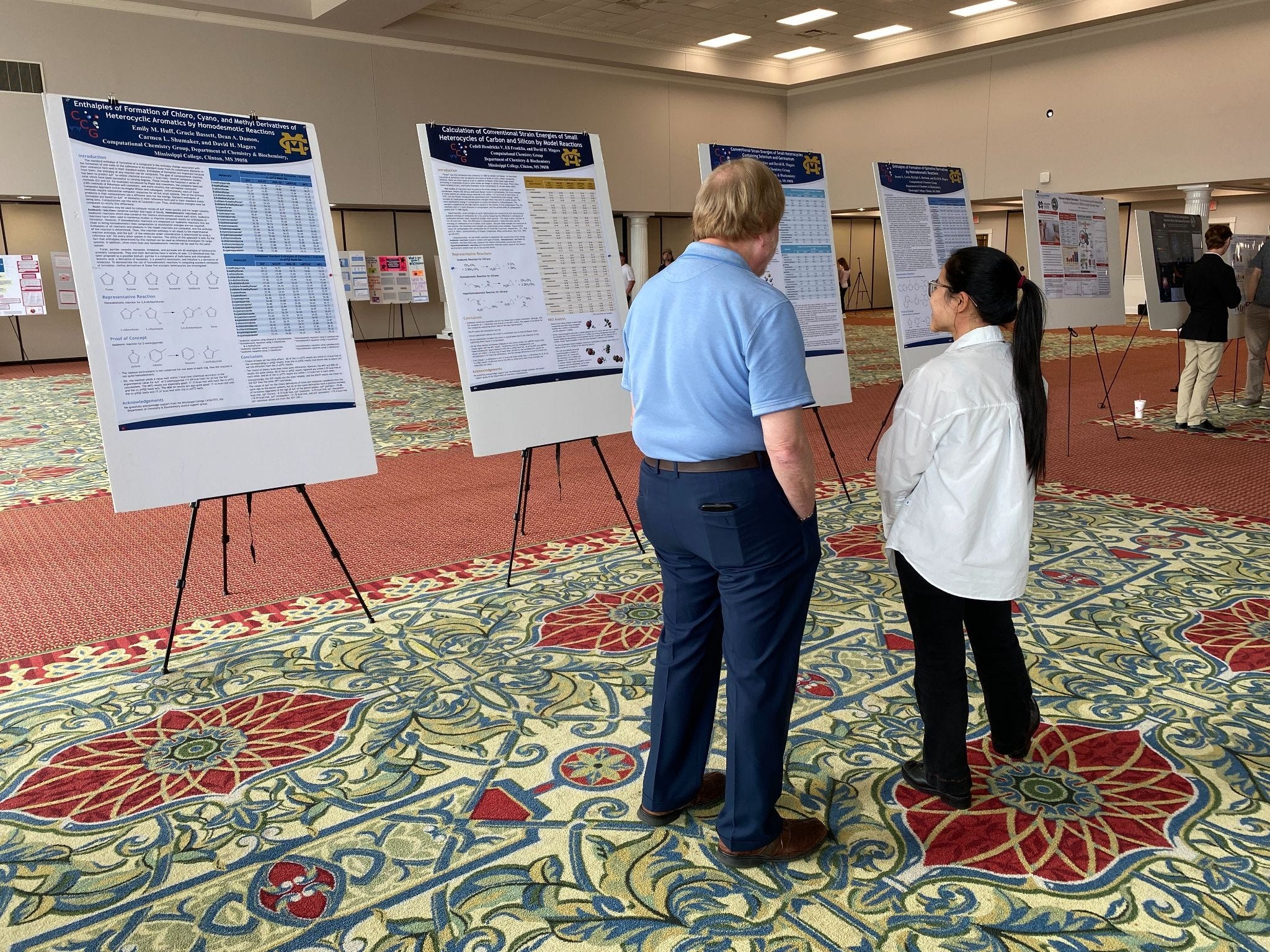
Over four days in late April, Mississippi College held its annual Research Week. Both undergraduate and graduate students presented research from a variety of fields, including English, biology, psychology, and chemistry. This year’s events marked the university’s second-ever Research Week, though several of the individual events have much longer histories.
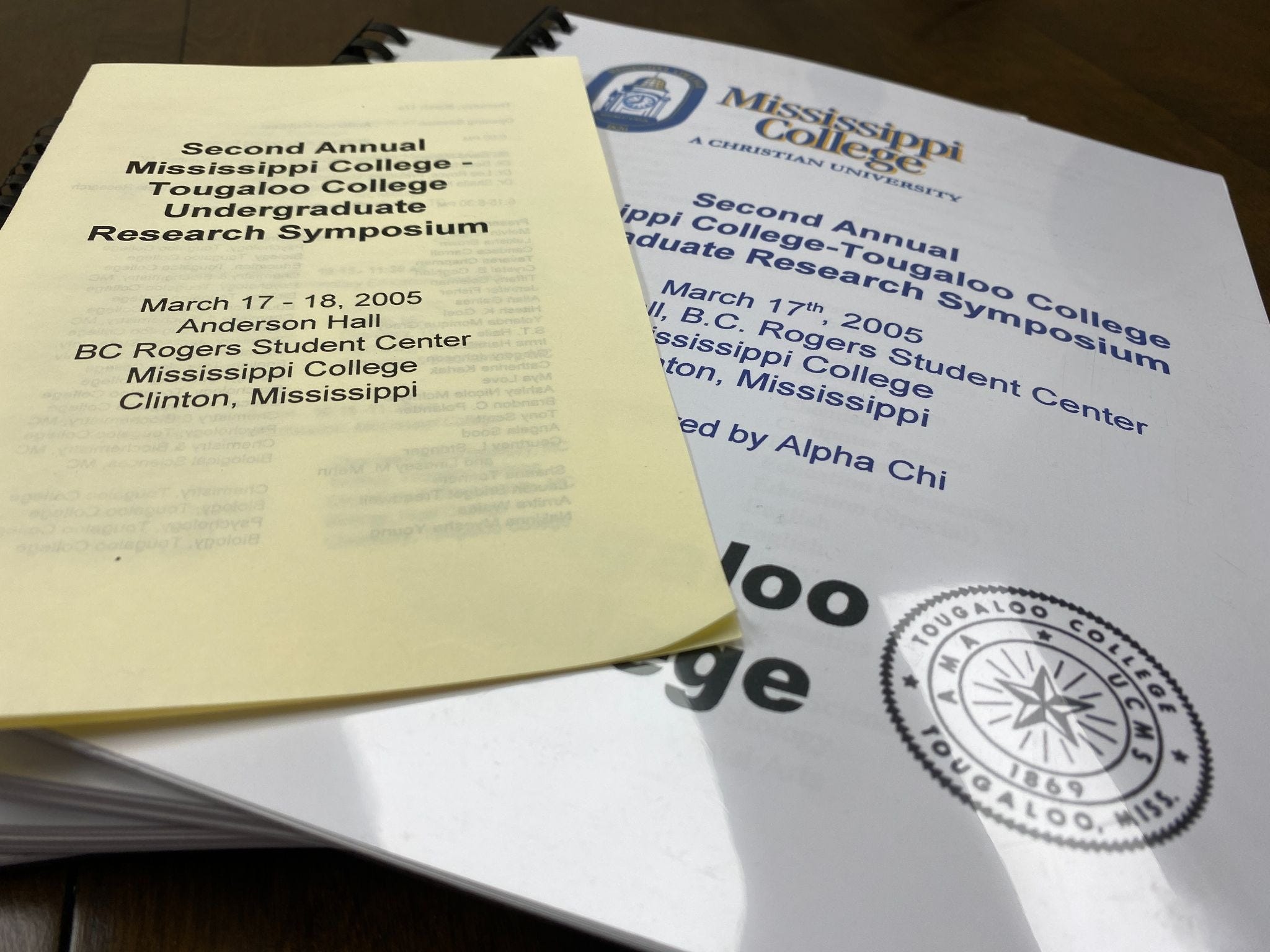
The 2026 Graduate Research Forum marked the 25th forum held at MC, with the first taking place in 1999 and a three-year hiatus occurring because of COVID-19. The forum is organized by David Magers, professor of chemistry and chemical physics, chair of the Academic Research Council, and director of the Office of Research. Magers also organized the first Undergraduate Research Symposium in 2003. Beginning in 2004, MC partnered with Tougaloo College to hold annual joint symposiums. COVID-19 later paused the symposiums.
The concept of an MC “Research Week” was created by Christian Pinnen, professor in the Department of History and Political Science and head of the Research Week Committee.
“While this is predominantly a teaching university, research is what moves us forward, both as scholars and students, as departments, as schools, and as this university as a whole,” Pinnen said. “We want to prepare our students in the best way we can in our discipline to be ready for whichever path they choose.”
Continue reading to learn more about the 2026 Research Week events.
Biology Presentation – Introduction to Biological Data Analysis
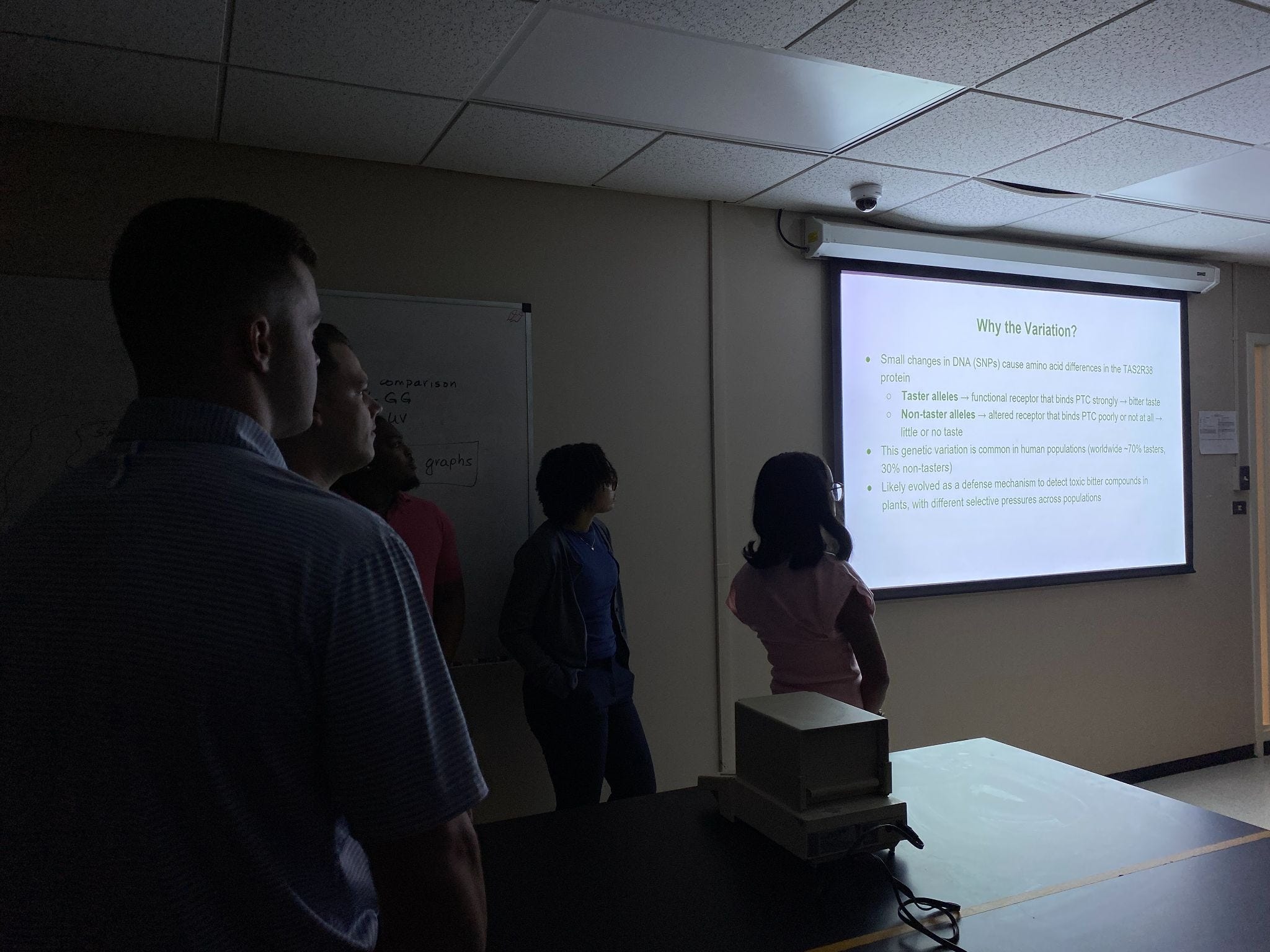
On Tuesday, April 21, undergraduate and graduate students in Special Topics: Intro to Biological Data Analysis (BIO 445/5445) presented “Detection and Analysis of a Single-Nucleotide Polymorphism in the TAS2R38 Gene Related to Bitter-Tasting Ability.” The course is taught by Angela Reiken, associate professor in the Department of Biological Sciences.
“One of the main labs associated with this class is Biology 307, which is Cell Biology and Genetics Lab, and then we also do Biology Data and Analysis,” Reiken said. “It’s a one-semester-hour lab, so anyone can take it and learn this particular skill.”
Graduate Research Forum
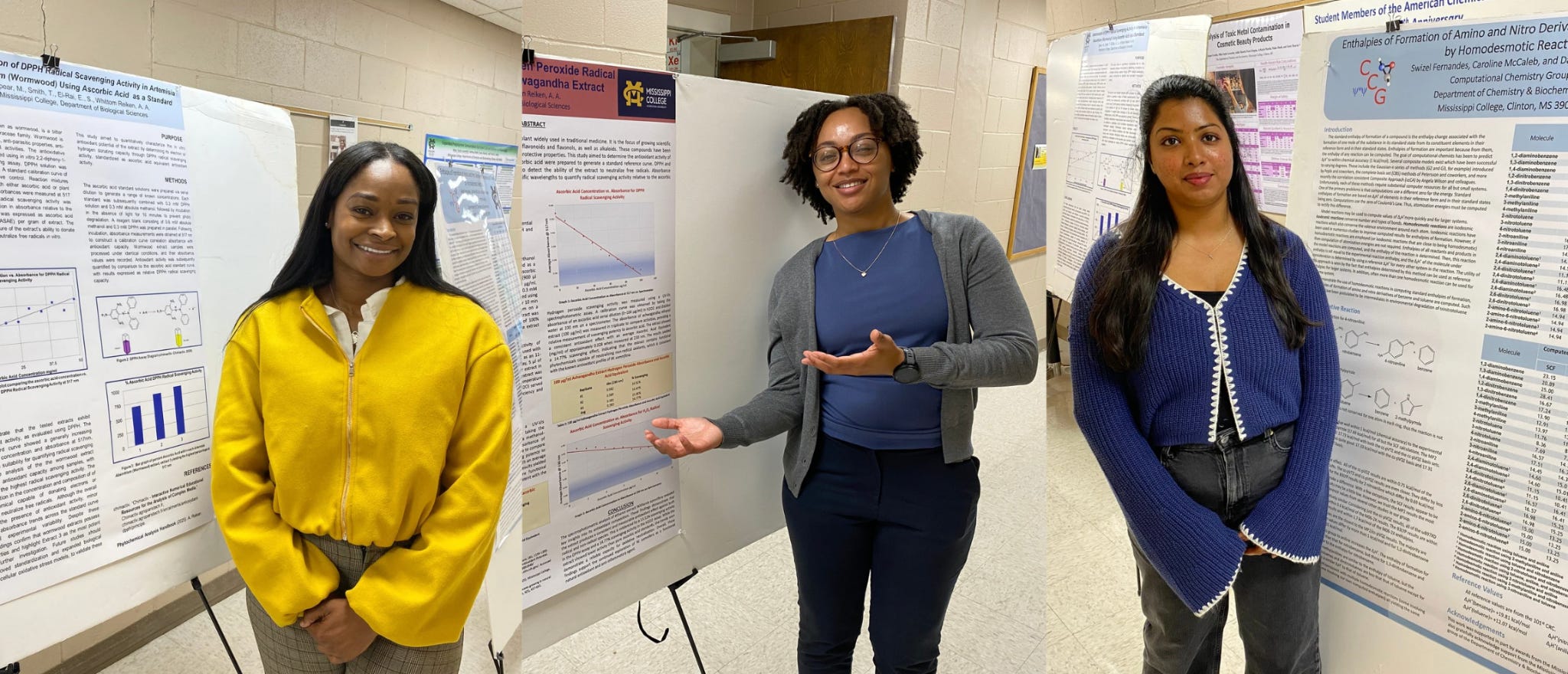
Also on Tuesday, April 21, graduate students from the Department of Biological Sciences and the Department of Chemistry and Biochemistry displayed posters on the fourth floor of the MCC building. The 2026 poster session was Fayetteville State University alum Marquisia Spear’s first time presenting during Research Week.
“I enjoyed this. I’m enjoying myself. I think Research Week is a really good thing,” Spear said. “I think this one is pretty small, but I think it’s great. It gives us experience, and this is something that I can add to my résumé. I’ve never done anything like this before, so I’m pretty excited.”
Following the poster session, four graduate students — Ashley Carter of the Department of Chemistry and Biochemistry, Jonathan Dacus of the Department of English and Philosophy, Grace Rogers of the Department of Biological Sciences, and Lanie Bradford of the Department of Art — delivered oral presentations of their research.
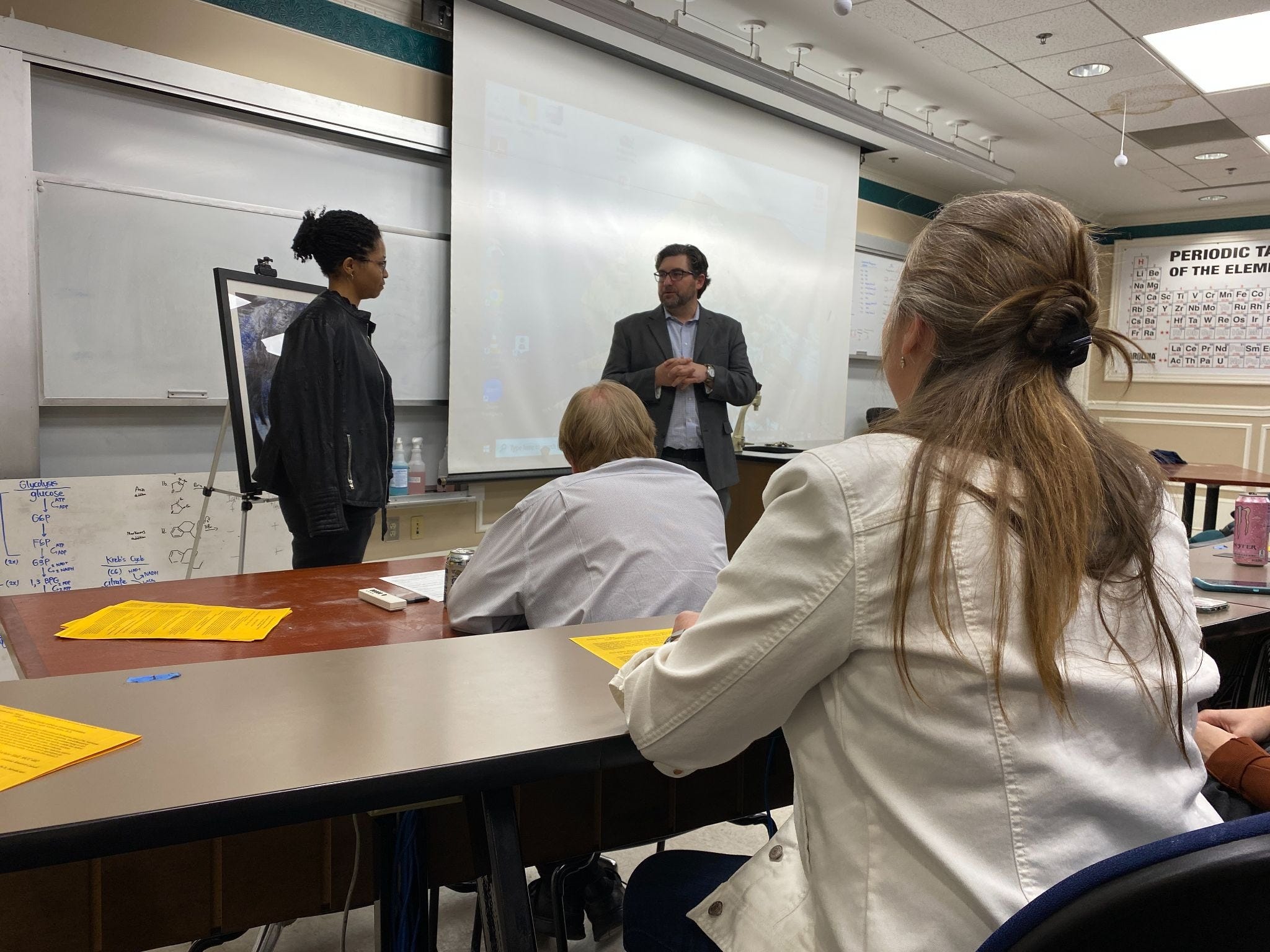
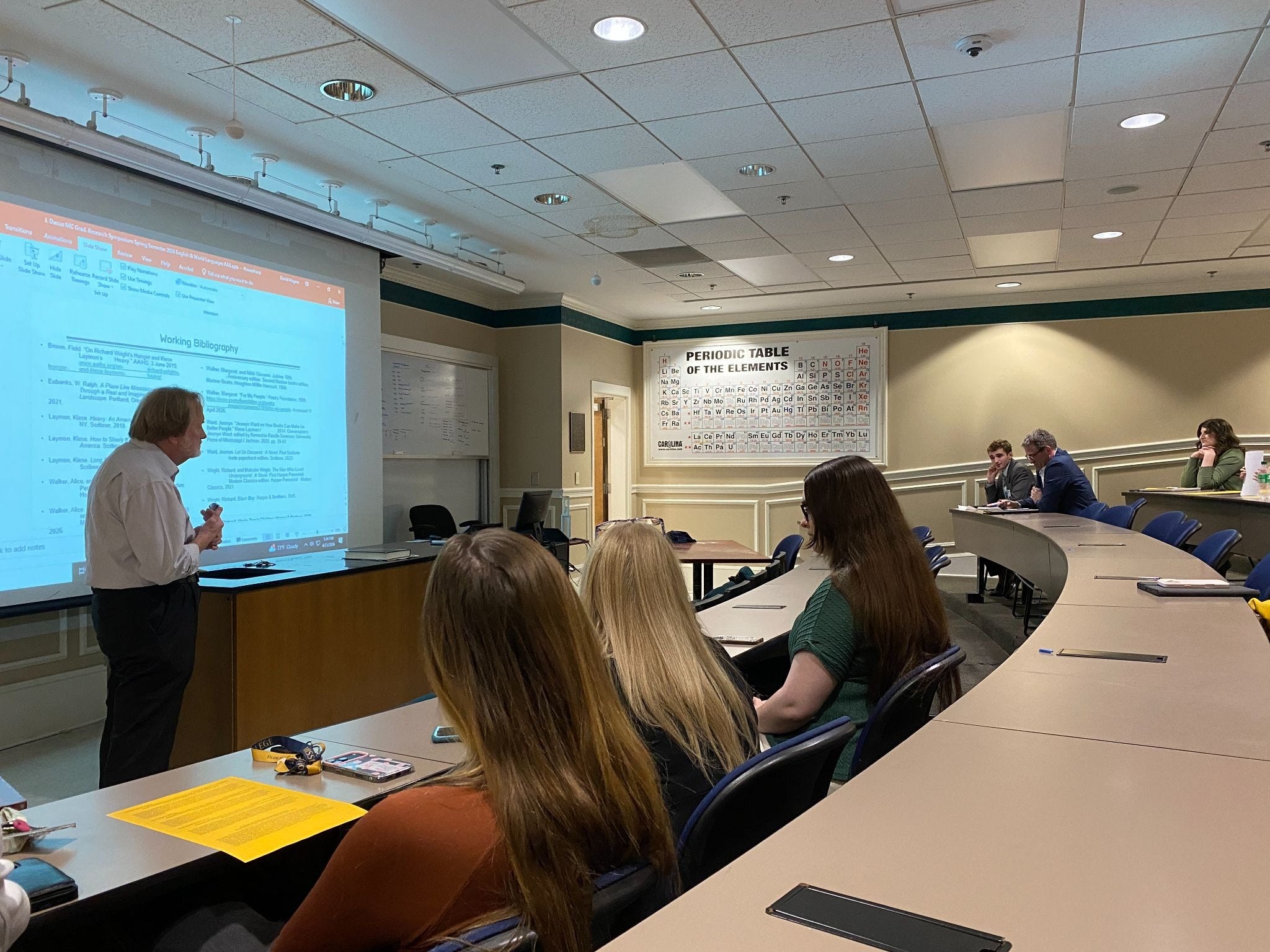
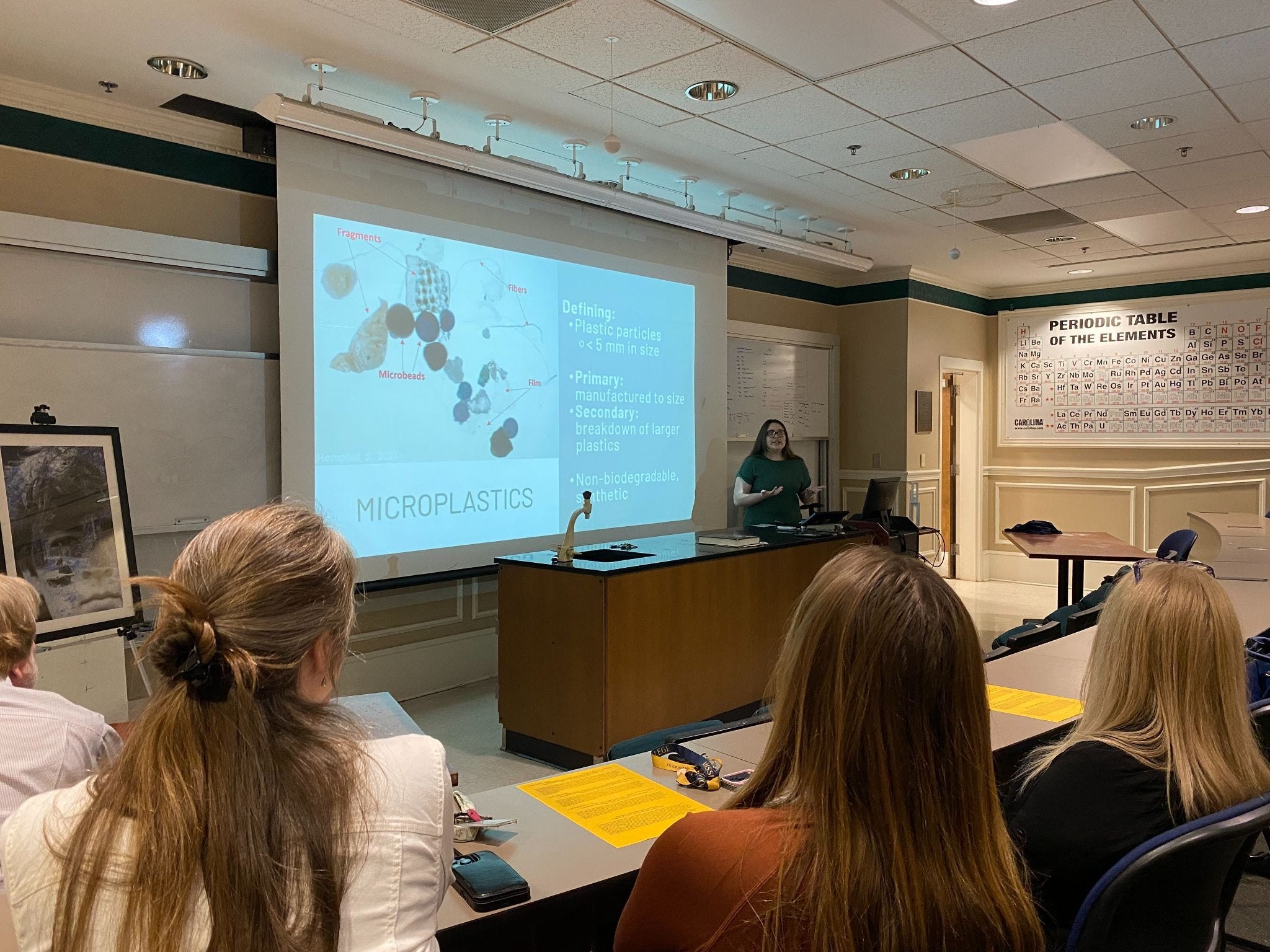
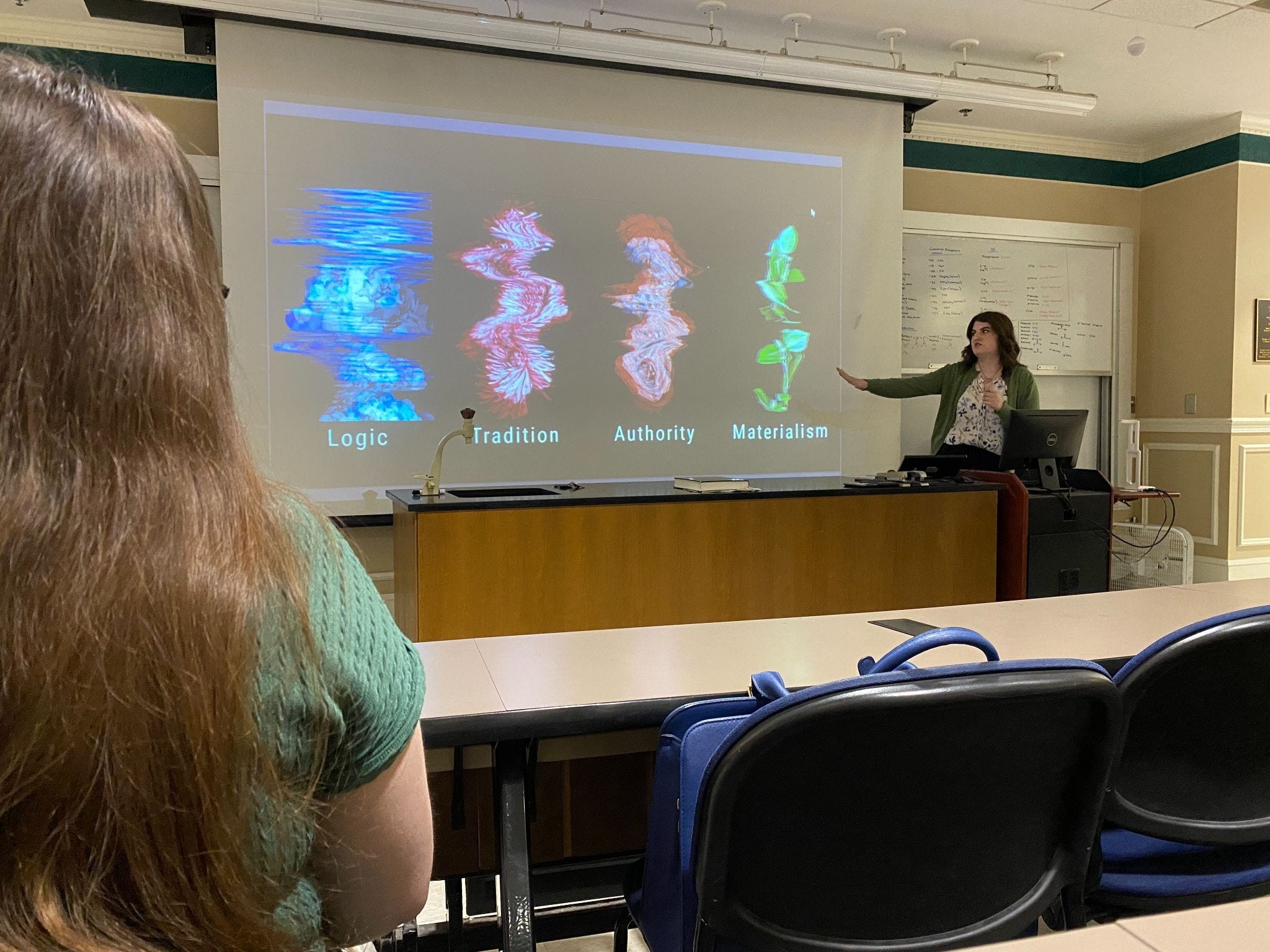
Magers and Stephanie Busbea, professor of art and dean of the School of Christian Studies, Humanities, and the Arts, judged the oral presentations to determine the winners of the Foman & Nita Musselwhite Prizes, which are awarded to the top three poster presentations and top three oral presentations. Carter earned first place, Bradford earned second, and Rogers earned third. The poster presentations, judged separately, tied for first place.
Undergraduate Research Symposium
On Wednesday, April 22, undergraduate students presented papers and posters throughout the day. History paper presentations began at 9 a.m., and interdisciplinary inquiry paper presentations began at 10 a.m. Posters were placed on display early in the morning for public viewing in Anderson Hall, though poster presentations did not begin until the afternoon, when disciplines presented in designated hour-long blocks.
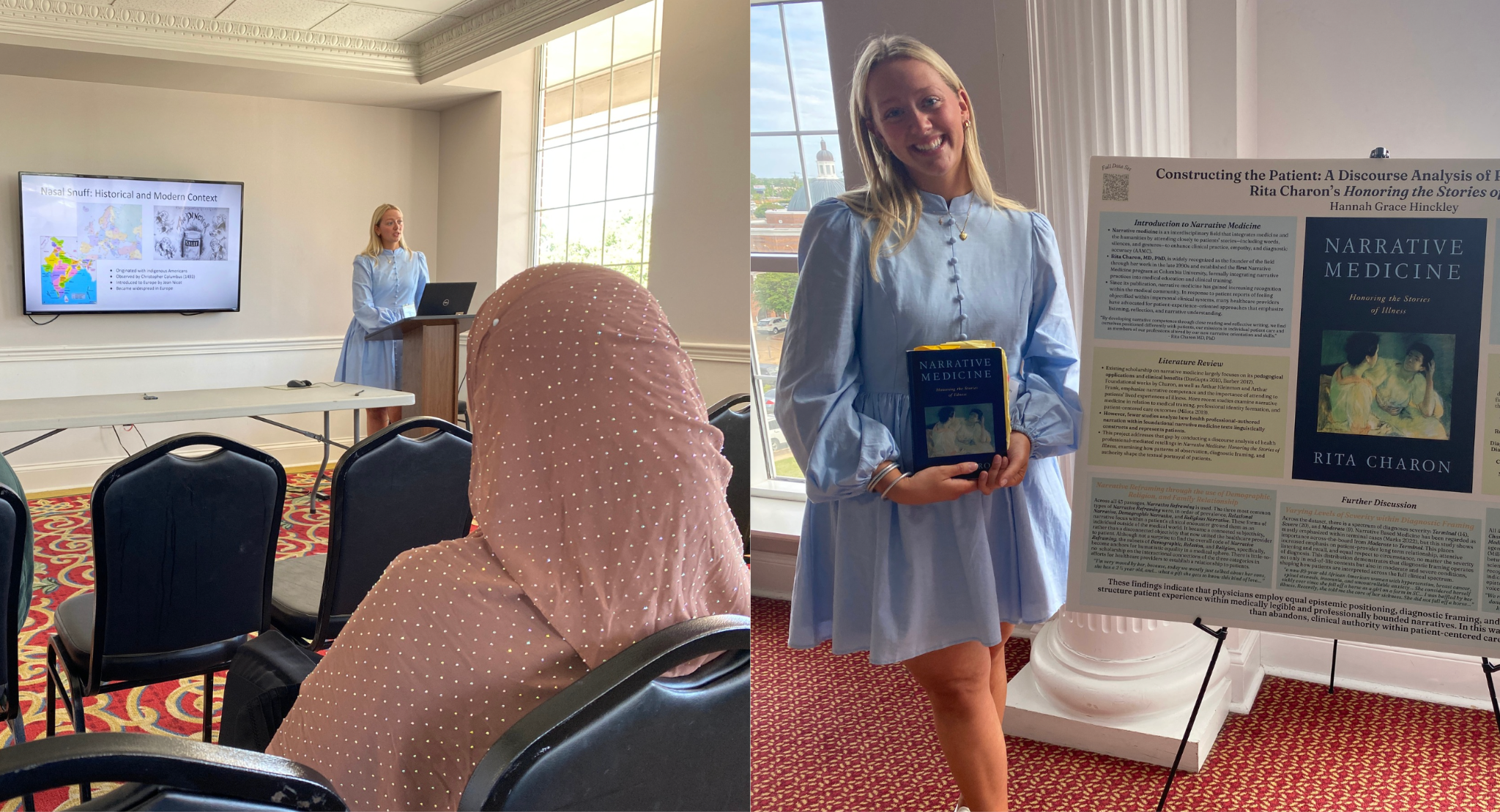
Hannah Hinckley, a senior double majoring in chemistry and English and a 2026 MC Hall of Fame inductee, presented two research projects, each connected to one or both of her majors. Her presentation, “Toxic Analysis of Nasal Snuff, A Historic Powdered Tobacco Product,” stemmed from her studies in Biophysical Chemistry Lab (CHE 421), while her poster, “Constructing the Patient: A Discourse Analysis of Physician Narration in Rita Charon’s Honoring the Stories of Illness,” connected to her studies in Senior Research Capstone (ENG 475).
Hinckley discussed her choice of poster topic.
“For a long time, I wanted to do something fun, something silly, something really not relevant to the medical side of things that I was dealing with,” Hinckley said. “I had looked into doing color analysis of rom-com scenes and looking at different introductions to plays because I wanted to do something different that would challenge me in a very different way than applying it to what I hoped to do as a profession.
“But the more that I kept looking into this field [of narrative medicine] and kept looking into this book, specifically, I just thought it was a perfect culmination of my English and my science background and something I really wanted to focus on.”
Honors Convocation
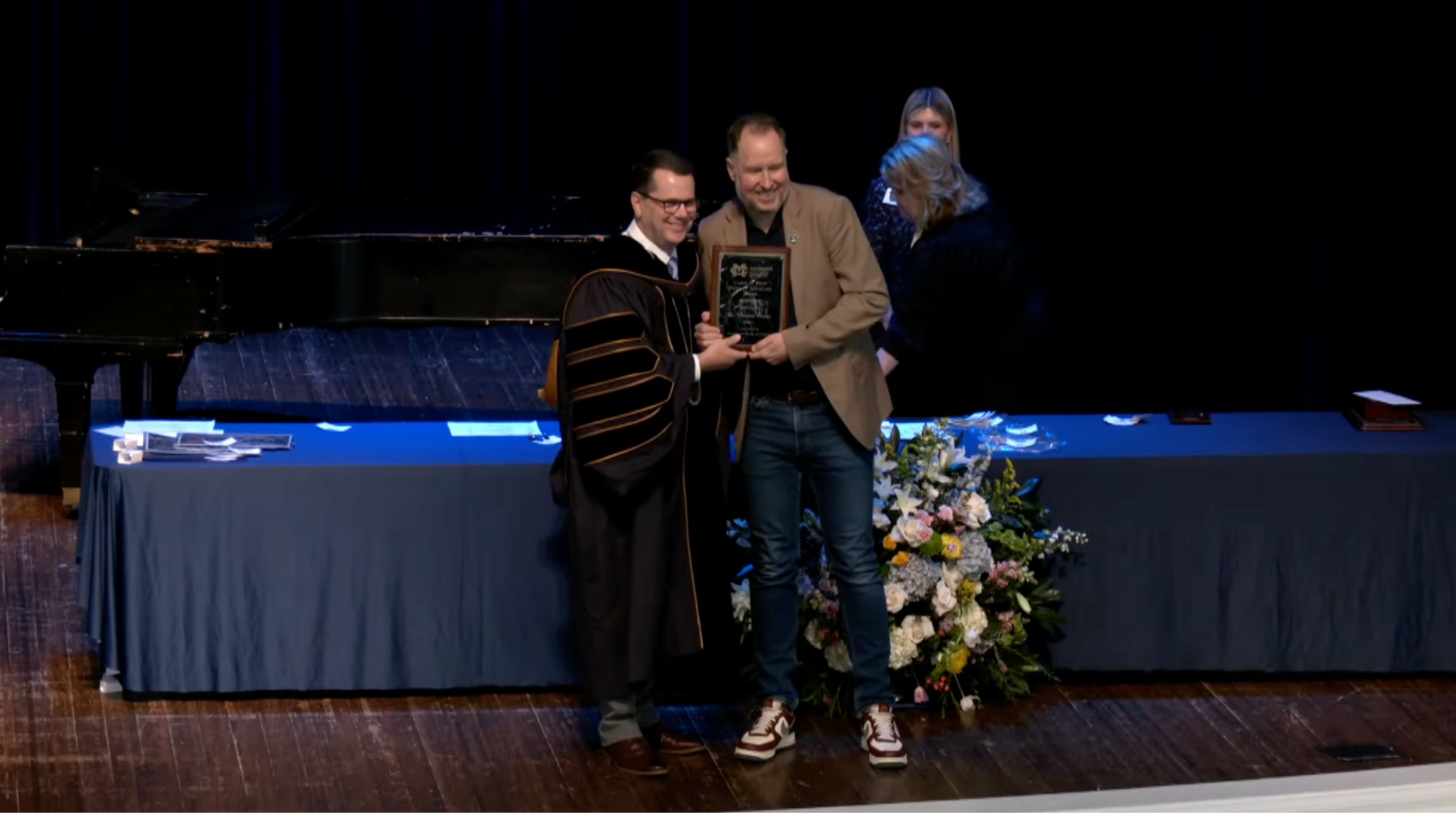
On Thursday, April 23, outstanding MC students and faculty members were honored during the annual Honors Convocation ceremony in Swor Auditorium.
Electrical Engineering – Autonomous Robot Presentations
On Friday, April 24, Research Week concluded with autonomous robot presentations from two teams of senior electrical engineering majors. The two groups, “Seek and Destroy” and “Evade and Elude,” competed against one another. Each group presented the result of a school year’s worth of labor, as the seniors completed both Senior Design I (ECE 451) in the fall and Senior Design II (ECE 452) in the spring.
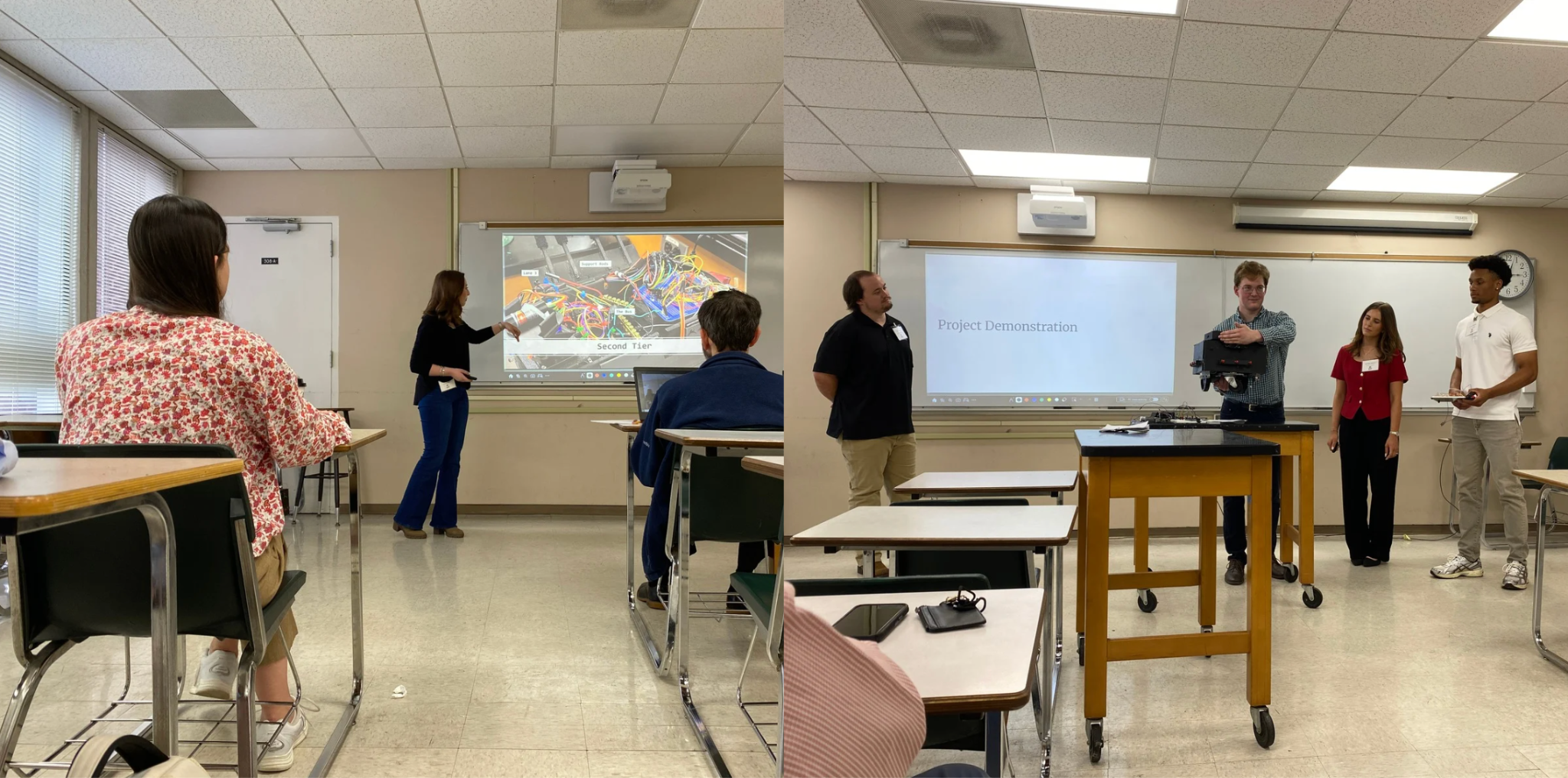
“So, in the fall, we created a testing plan with a full, I think it was, like, 18-page data sheet,” Gabbie Morgan, senior electrical engineering major and “Seek and Destroy” team member, said. “And then second semester was actually implementing that testing plan and building it.”
ECE 451 is taught by Jason McNeely, associate professor in the Department of Engineering, Computer Science, and Physics, while ECE 452 is taught jointly by McNeely and Chris Maggio, chair of the department.